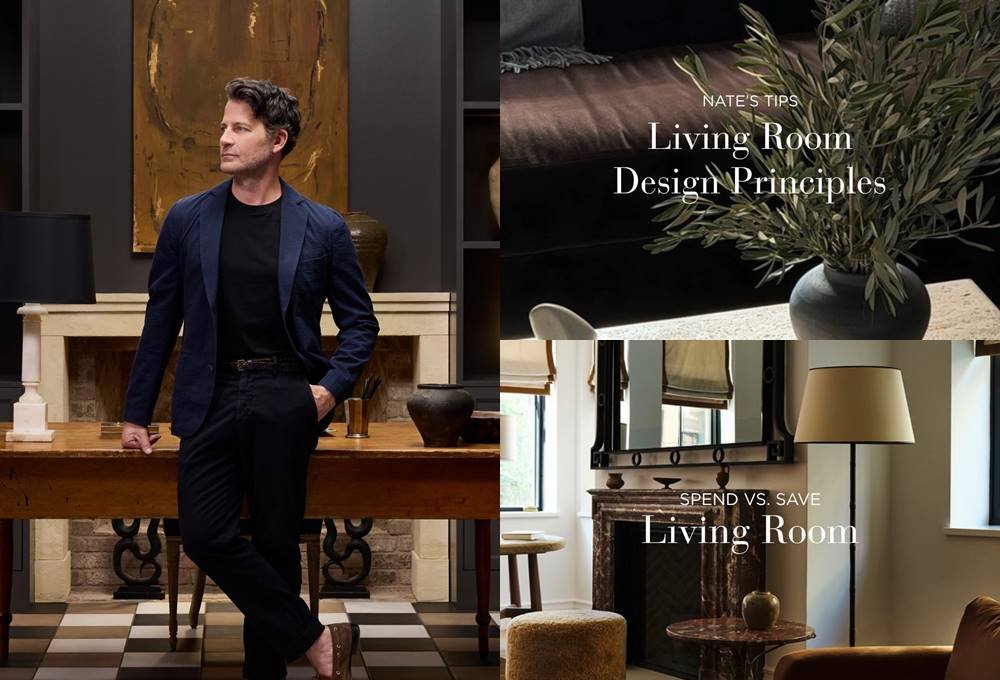
The best living room design ideas aren’t necessarily about following trends or buying an entirely new furniture collection. Interior designer Nate Berkus takes a more personal approach, creating spaces that combine different periods, materials, textures and objects with individual meaning.
Living Room Design Ideas
His living rooms often feel refined without looking overly coordinated. Vintage pieces sit alongside contemporary furniture, natural materials create warmth, and layouts are designed around how people actually use a room.
If you want a living room that feels comfortable, layered, and individual, here are nine Nate Berkus-inspired principles worth considering.
-
Mix Different Seating Styles
Instead of purchasing a perfectly matching sofa and chair set, try combining seating with different shapes and personalities.
A simple upholstered sofa can work with a curved accent chair, vintage occasional chair, or more sculptural seat. The pieces don’t need to match, but their proportions should work together. This approach can make a living room feel less like a showroom and more like a space that has developed naturally.
It can also improve the layout. Position chairs toward the sofa rather than automatically placing every piece against a wall. This helps create a setting where people can comfortably interact.
Amazon pick: Shop upholstered accent chairs on Amazon
-
Add Depth Through Layered Textures
Texture plays an important role in Nate Berkus-inspired interiors, particularly when working with neutral colors.
Rather than adding more colors, combine materials with different surfaces. Linen, wool, wood, natural stone, ceramic, woven fibers and aged metals can all contribute something different. For example, pair a neutral sofa with textured cushions, a wooden coffee table, a wool rug and a ceramic accessory. The colors can remain restrained while the room gains visual depth.
You don’t need to use every material at once. A few contrasting textures are usually more effective than filling the room with decorative details.
Amazon pick: Shop neutral textured pillow covers on Amazon
-
Arrange Furniture Around Conversation
Personal artwork and collected objects can make simple living room design ideas feel far more distinctive. A successful living room should work for the people using it, not just look attractive in photographs.
One principle visible in Berkus’s approach is arranging seating in a way that encourages conversation while respecting the architecture of the room. Consider whether people sitting on different chairs can comfortably talk. Make sure the coffee table is accessible and leave enough room for natural movement between furniture.
In a larger room, you might even create separate seating zones rather than forcing everything into one large arrangement.
Before moving furniture, ask a simple question: How will people actually use this space?
The answer should guide the layout.
-
Bring Vintage and Contemporary Pieces Together
Vintage furniture and accessories are a recurring feature of Nate Berkus’s interiors.
An older object can introduce character that is difficult to achieve when every piece is brand new. However, you don’t need a room full of antiques. Try adding one distinctive older element, such as a vintage mirror, side table, lamp, ceramic vessel, decorative box, or framed artwork. Placed beside contemporary furniture, an older piece creates contrast and helps the room feel less predictable.
Don’t worry if a vintage object shows some age. Variations in wood, worn finishes, and aged metals can contribute to its appeal. For authentic pieces, explore antique stores, estate sales, and flea markets rather than relying entirely on mass-produced vintage-style decor.
-
Choose Art and Objects With Personal Meaning
One of the strongest ideas associated with Nate Berkus’s design philosophy is the importance of personal objects.
Instead of selecting artwork only because its colors coordinate with the sofa, consider pieces connected to your interests, family, travels, or experiences. That could include original artwork, photography, a framed textile, family photographs, or something discovered while travelling.
Apply the same thinking to shelves. Learn more on Nate Berkus Bookshelf Styling Tips
Books you genuinely enjoy, handmade ceramics, photographs, and objects you’ve collected over time can make a room feel more individual than shelves filled entirely with generic accessories. The goal isn’t to make every object valuable. It is to make the collection relevant to the people living there.
-
Mix Materials Instead of Matching Everything
Practical living room design ideas should consider how people actually move, sit, and interact in the space. Another useful idea is to avoid repeating the same finish across every piece of furniture. If you already have a wooden coffee table, your side table doesn’t necessarily need to be wood.
Consider combinations such as:
Wood + stone + linen + metal + woven fibers
A wooden table could sit beside a linen sofa, stone side table, and metal floor lamp. These materials contrast with one another while still creating a cohesive room. To prevent the design from becoming chaotic, repeat selected materials elsewhere. For example, the metal finish of a lamp might appear again in a small accessory.
Amazon pick: Shop stone-look side tables
-
Know Where to Invest and Where to Save
Not every living room purchase deserves the same budget.
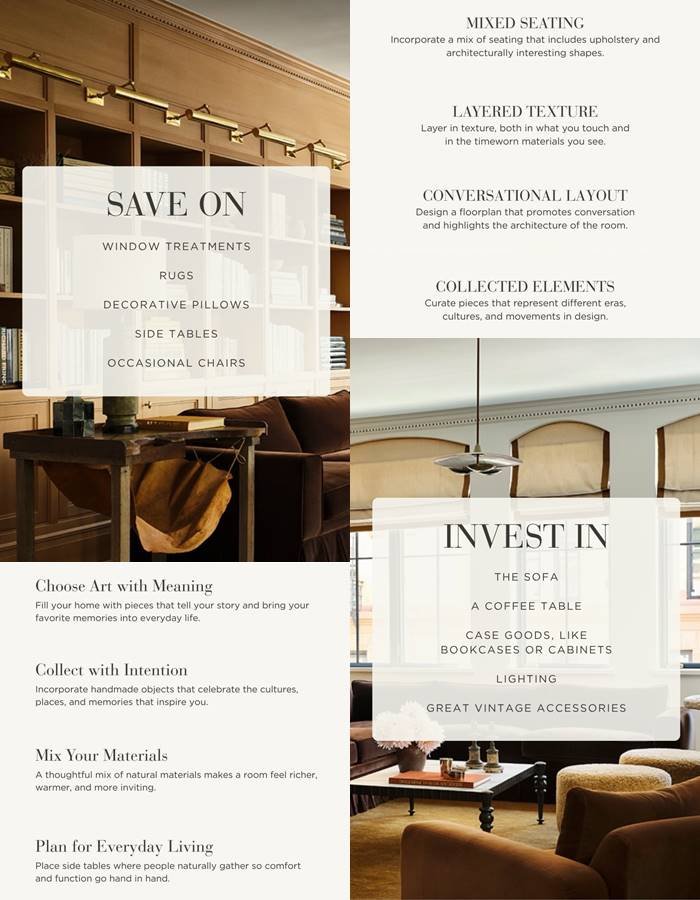
In the living room guidance shared by Nate Berkus, he suggests putting more money toward major or lasting elements, including
- the sofa
- coffee table
- case goods such as bookcases and cabinets
- lighting
- strong vintage accessories
He identifies areas such as the following as opportunities to spend less.
- decorative pillows
- side tables
- occasional chairs
- some rugs
- window treatments
Treat this as a budgeting framework rather than a strict rule. A sofa used every day may justify spending more on comfort and durability, while pillow covers can be replaced relatively easily.
The broader lesson is useful: invest in longevity and save where flexibility matters more.
Amazon pick: Shop living room floor lamps or explore other living room floor lamps options
-
Plan Side Tables Around Everyday Life
Small furniture can have a surprisingly large effect on how comfortable a living room feels.
Berkus’s living room advice includes placing side tables where people naturally gather. It is a simple principle that connects design with everyday function. Sit in each chair and consider what you would need nearby. Is there somewhere to put a drink? Can you reach a lamp? Is the coffee table too far away?
A compact side table beside an armchair can solve these practical problems while also introducing another material or shape into the room.
Amazon pick: Shop compact living room side tables
-
Let the Living Room Develop Over Time
Perhaps the most useful lesson from Nate Berkus’s approach is that a room doesn’t need to be completed immediately. Instead of buying accessories simply to fill empty shelves and walls, allow space for better pieces to appear over time.
Wait for artwork you genuinely like. Keep an empty shelf until you have something worth displaying. Look for a vintage table instead of purchasing an uninspiring substitute because a corner feels unfinished. This gradual approach can also help prevent expensive decorating mistakes.
More importantly, it gives the living room an opportunity to reflect new experiences, discoveries and changing tastes.
How to Apply These Ideas Without Redesigning Everything
- You don’t need to replace your entire living room to introduce these principles.
- Start by rearranging existing furniture into a more conversational layout. Introduce one contrasting texture, bring a meaningful object out of storage or replace a generic accessory with something personal.
- Then evaluate your materials. If everything is wood and fabric, consider introducing stone, ceramic, glass or metal.
- Small changes can create the layered effect associated with Berkus’s interiors without requiring a complete renovation.
Final Thoughts
These living room design ideas inspired by Nate Berkus share a common theme: a successful room should feel personal rather than perfectly coordinated.
Mix seating instead of buying everything from one collection. Layer different textures and materials. Place vintage objects beside newer furniture. Choose art because it matters to you, and arrange furniture around how people actually live. Be strategic with your budget too. Spend more where durability and long-term use matter, while saving on accessories that can easily change. Most importantly, don’t rush to finish the room.
Rather than trying to recreate a Nate Berkus interior exactly, use these principles to create a living room that reflects your own taste, experiences, and everyday life.
Affiliate Disclosure: This article contains affiliate links. If you purchase through one of these links, the author of this article may earn a commission at no additional cost to you.